The FLS Series custom single or multiple level switches are a magnetic reed level float switches are a vertical or horizontal level detecting device. The design incorporates a round float with internal magnet that travels on a tube that contains a reed switch that is a contact for passing current for a N.O or N.C. orientation. When the float travels over the reed switch the magnet either closes or opens the contact. These designs are highly customizable.
Multi-level float sensors are typically used for level monitoring, combining the FLS with the Intell-i-Watch monitor system can be used in many types of applications. Another common use for our multi-level sensor is to provide redundant alarm indications.
These liquid level sensors are available with many different materials including stainless steel, brass, polypropylene, PVC, Teflon and more. Many float options are available.
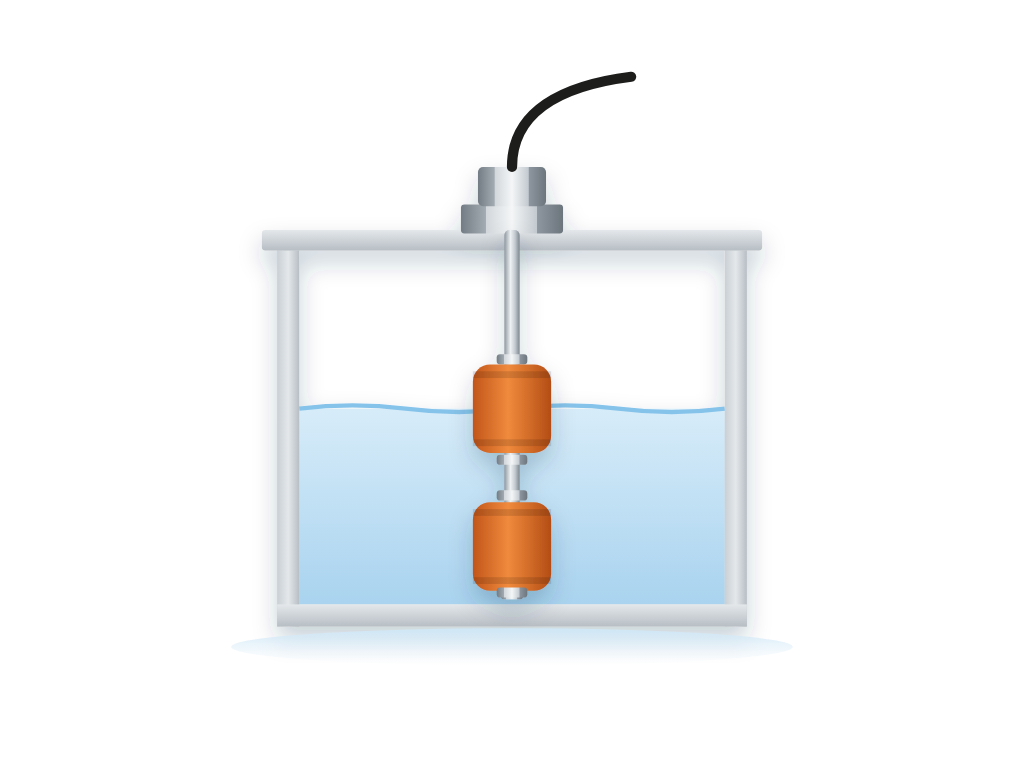
The FLS float sensor design is engineered using the best components and manufacturing techniques to insure a quality, reliable level sensor suitable for the most demanding applications.
The water level three level float sensor allows for actuation points measuring from ½” minimum to 235″ or more. It is possible to have the two switch points as close as ¼” from each other with no limit on how far apart they can be.
A variety of signal types can be used with these switches such as 115VAC, 0-24 VDC and different wattages are offered such as 10W, 50W & 100W.

Intell-i-Watch multi-sensor transmitter monitoring systems are designed and supported by Pan America Environmental, Inc., with over 35 years of experience in industrial water and wastewater treatment.